Flaccid vs. Erect: Why the Soft Number Tells You Almost Nothing
Published April 21, 2026 · Updated July 1, 2026
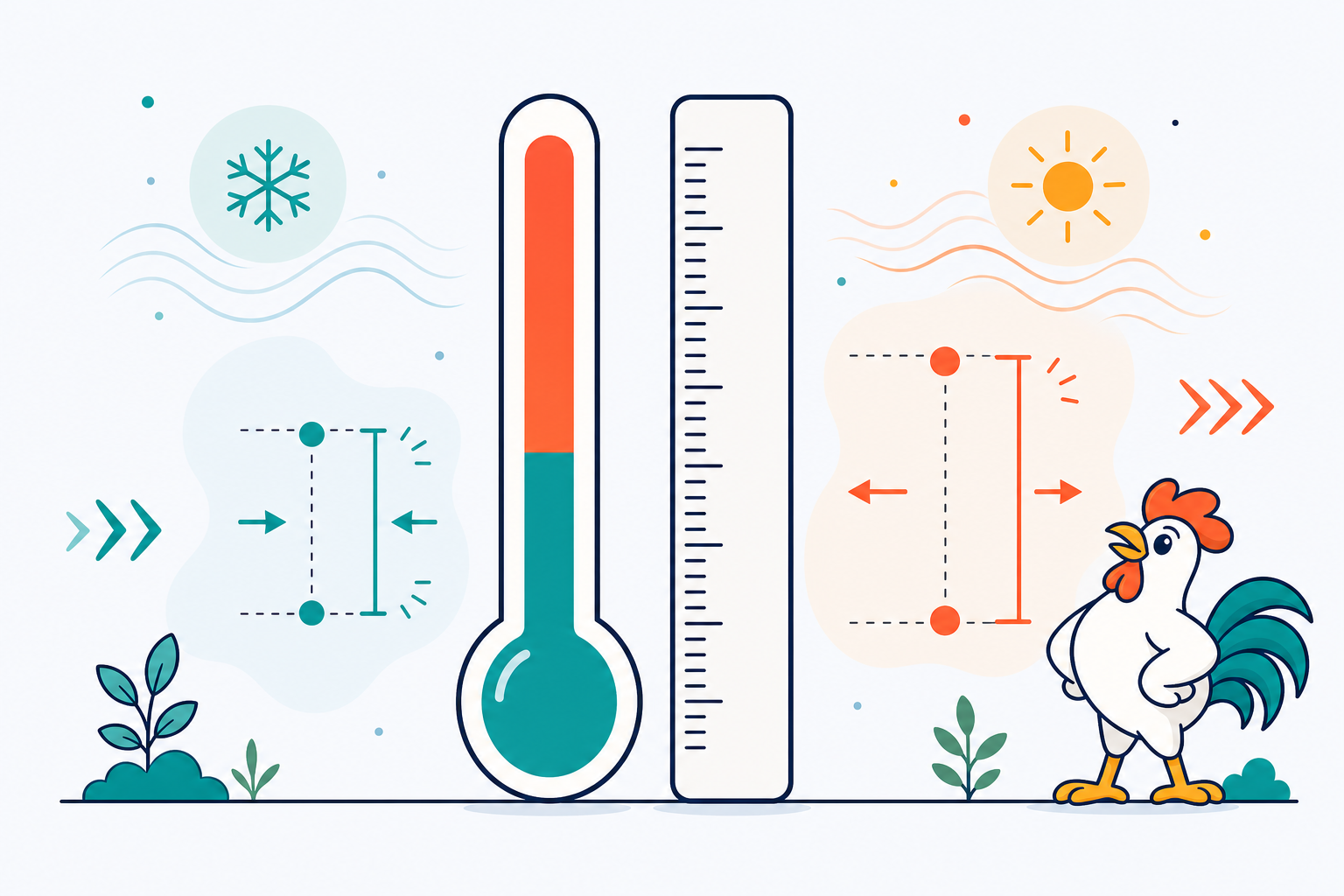
If you size yourself up soft, you’re trusting the least reliable measurement your body makes. Flaccid size is a mood ring. It answers to the room, your nerves, the temperature of the pool you just hauled yourself out of. And it tells you almost nothing about the number that matters when it actually counts.
The soft number won’t hold still
A flaccid penis isn’t a fixed object. The same man measures noticeably longer on a warm, relaxed afternoon than he does walking out of a cold shower, and the swing happens fast: a couple of centimetres gone in minutes, because the smooth muscle in the shaft and scrotum clenches to hold heat. Stress does it. So does a full bladder, the hour of the day, and how recently you last had an erection. None of that is a malfunction. It’s plumbing reacting to weather.
The clinical average flaccid length is about 9.16 cm (3.6 in), from Veale’s 2015 review of more than 15,000 men measured by health professionals. The figure shows up everywhere, and on its own it barely means a thing, because the spread around it is huge. Two men with identical erections can carry flaccid lengths that look like they belong to strangers. The average is real. Its power to predict any one man is close to nil.
The biology behind the bounce
Knowing why the soft number is so jumpy is the cure for reading meaning into it. The penis is mostly spongy erectile tissue wrapped in smooth muscle, and at rest that muscle has one job: regulate blood flow and temperature. When you’re cold or tense, it contracts and pulls everything in tight, a reflex called retraction, same logic as goosebumps. When you’re warm and relaxed, it lets go and everything hangs longer. Neither state is “the real you.” They’re two ends of a range your body slides along all day without asking permission.
Picture the same man on two mornings. Monday he’s running late, the office is freezing, he gulped coffee on an empty stomach: short, tight, unimpressive. Saturday he’s slept in, the room’s warm, no rush: visibly longer, softer, looser. Nothing about him changed except the conditions. Measure both mornings and he’d swear his body had pulled a fast one. It didn’t. He just took two readings of the weather and mistook them for facts about himself.
This is why the “I shrank” panic after swimming is so common and so pointless. You caught your body at maximum retraction and read it as a verdict. It’s like weighing yourself soaking wet in winter boots and concluding you’ve gained ten pounds.
Growers, showers, and why the locker room lies
The “grower versus shower” split isn’t a forum myth. It’s a real pattern. A grower looks modest soft and expands dramatically when erect. A shower starts bigger soft and gains comparatively little. Most men live somewhere on the line between the two, and where you land says nothing about how capable you are. It’s anatomy, not a report card.
Here’s the part worth sitting with. Flaccid size is a poor predictor of erect size, and erect is the dimension that matters for sex. The locker room, the urinal, the half-second changing-room glance: every casual comparison you’ve ever made stacked the wrong number against other men who were also at the mercy of cold air and nerves. Worst possible conditions, all around. If you’ve spent years quietly ranking yourself on that, you ranked yourself on static.
And look at what those comparisons actually were. A pronounced grower next to a pronounced shower in a cold locker room can read as two different leagues soft, then end up neck and neck erect, or the grower pulls ahead. You never see that second frame. The comparison you carry around was shot under the worst lighting, the most retraction, the least information, and you’ve been treating it as the final score. It was the warm-up nobody finished.
What the studies actually measure
Researchers gave up on flaccid length long ago, which is why the serious nomograms don’t lean on it. They track erect length, erect girth, and stretched length. From the Veale data, average erect length is 13.12 cm with a standard deviation of 1.66 cm, and average erect girth is 11.66 cm measured around the mid-shaft. Those are the numbers our calculator runs on, and you can read exactly how the percentiles are derived on the methodology page.
Stretched length is the clinician’s stand-in for erect. Take the soft penis, pull it out gently to its natural limit, and measure. It tracks erect length closely while skipping all the temperature and arousal chaos, so a doctor who wants a quick, repeatable number stretches rather than wait around. Doing it right at home is fussier than people expect; our how to measure guide covers bone-pressed technique, where the ruler actually goes, and the small slips that quietly pad or shave the result.
And a standard deviation of 1.66 cm is small. It means the bulk of men are packed close to that 13.12 cm centre, not scattered across a wide range. Step one SD up and you’re at roughly 14.8 cm, already in the top sixth of men. Step one SD down lands you near 11.5 cm and still squarely normal. The dimension you actually care about is far more uniform than the soft glance ever let you believe. Most of the variety men think they see is flaccid noise.
The range nearly everyone lives in
Put the distribution in front of a worried man and the dread tends to leak out of the room. Roughly 90% of men fall between 10.7 cm and 15.5 cm erect. That’s the fat part of the bell curve: the wide, unremarkable, perfectly normal middle where almost everybody is standing whether they buy it or not. Real outliers are rare in both directions. Clinically, a micropenis is defined as under about 9.3 cm stretched (2.5 standard deviations below the mean), and it’s uncommon, far rarer than the number of men who privately fear they qualify. If you’ve talked yourself into the extreme, the math says you almost certainly aren’t there. For the full picture of what does and doesn’t count as small, see our guides on what counts as a micropenis and whether 5 inches is normal. Spoiler: it’s near dead average.
Sit with how wide that 90% band is. The distance from 10.7 to 15.5 cm is nearly five centimetres, almost two inches, of “perfectly ordinary.” A man at 11 cm and a man at 15 cm are both in the normal majority, both unremarkable to a clinician, both nowhere near any threshold for concern. The gap that feels like a chasm in your head is the gap between two men who’d each be told they’re fine. Curious where the line sits in your own country? Our country-by-country breakdown shows how little the regional averages actually move once you account for measurement method. Most of the dramatic “national” differences online are self-reported numbers and rulers held differently, not biology.
How to take one honest reading
If the soft glances have been gnawing at you, the fix isn’t to glance more carefully. It’s to take a single proper measurement and be done. Here’s the version that won’t lie to you:
- Get warm and relaxed first. A cold or anxious measurement is just another reading of the weather. Give it a few minutes in a comfortable room.
- Measure erect, or stretched if erect isn’t practical. These are the only readings that mean anything.
- Press the ruler firmly into the pubic bone (“bone-pressed”) at the top of the shaft. Fat pads vary, and pressing past the pad is what makes the number comparable to the studies. Skip this and you’ll shave a centimetre or two off and scare yourself for no reason.
- Measure along the top, from bone to tip. For girth, wrap a soft tape or a strip of string around the thickest part of the mid-shaft and read it flat against a ruler.
- Do it once. Write it down. Resist the urge to re-measure in five different moods looking for a better answer; you’ll just rediscover that the number drifts, which you already knew.
Then run it against the percentile and let the real figure replace the imagined one. The full technique, including the mistakes that pad or shave results, lives in the how to measure guide.
What partners notice (and what they don’t)
The other reason flaccid worry is wasted: nobody is grading your soft measurement, and the evidence says they aren’t grading erect size the way you fear either. Prause’s 2015 preference study had women pick from 3D-printed models across a range of sizes. They leaned slightly above average for a hypothetical one-night thing, and closer to plain average for a long-term partner, and the gaps in preference were modest, not the steep cliff anxiety keeps insisting on. Read it plainly: there’s no single ideal everyone is chasing, the realistic preferred range sits right where most men already are, and for an actual relationship, average is the sweet spot. Want the longer argument? Does size matter walks through what partners report mattering most, and it’s rarely the thing men fixate on.
Notice what that study didn’t include: no flaccid model, no “soft size” question, nothing about the dimension men spend the most time worrying over. Of course not. The soft state isn’t the one a partner ever evaluates, and the erect preferences clustered politely around average rather than spiking toward extremes. The whole anxious arithmetic, your cold, retracted, locker-room worst against an imaginary ideal a partner is supposedly holding, turns out to be measuring a thing nobody’s scoring.
Stop measuring the weather
The soft glance is a thermometer, not a ruler. It reads the room (cold, stress, time of day) and reports back numbers that bounce for reasons that have nothing to do with you. So quit weighing yourself by it.
If you genuinely want to know where you stand, do it once and do it properly. Erect or stretched, bone-pressed, ruler pushed firmly to the pubic bone, then check your percentile. Most men who run this find themselves sitting comfortably in that 10.7-to-15.5 cm band, closer to the middle than they’d ever assumed, and the number they’d been hauling around in their head was the cold-changing-room version, the least honest reading their body produces. Measure the right thing once. Then put it down. You almost certainly have nothing to fix and a fair pile of needless worry to set aside.
FAQ
Why do I look so much smaller after swimming or a cold shower? That’s retraction: the smooth muscle in the shaft and scrotum contracting to hold heat. Cold water is about the strongest trigger there is, so you’re seeing your body at maximum pull-in. It’s temporary, it’s normal, and it says nothing about your erect size. You caught the most misleading reading your body produces and panicked over it.
Does a small flaccid size mean a small erect size? No. Flaccid length is a poor predictor of erect length, that’s the whole point. Growers start modest soft and expand a lot; showers start larger soft and gain less. The only way to know your erect size is to measure erect or stretched, bone-pressed, using the how to measure method.
Am I below average if I’m worried about my size? Almost certainly not. Roughly 90% of men fall between 10.7 cm and 15.5 cm erect, and a clinical micropenis (under about 9.3 cm stretched) is genuinely rare, far rarer than the number of men who fear they qualify. The worry is common; actually being an outlier is not. Take one honest measurement and check your percentile before trusting the version in your head.